

 русский
 عربى

A touchless tap activates water flow through sensor detection rather than physical handles or levers. The system relies on electronic components that register the presence of hands or objects within a defined range. Once the sensor registers movement or proximity, it signals a solenoid valve to open. When the detected object leaves the range, the valve closes and the flow stops. This sequence forms the basic operation of every touchless tap.
Valve and Flow Control Mechanisms
The solenoid valve forms the mechanical heart of the system. When the sensor circuit supplies current, the valve opens and allows water to pass. The valve can be configured for different flow rates and can include a built-in mixer that blends hot and cold supplies to a preset temperature. Response time is usually measured in fractions of a second, so water begins to flow almost immediately after detection.
Shut-off is equally automatic. Once the sensor no longer detects an object, the circuit cuts power to the solenoid and the valve returns to the closed position. Many units include an automatic shut-off timer that limits continuous flow to a set duration, even if the sensor remains activated. This feature prevents prolonged running if an object is left in the detection zone.
Design Configurations of Touchless Taps
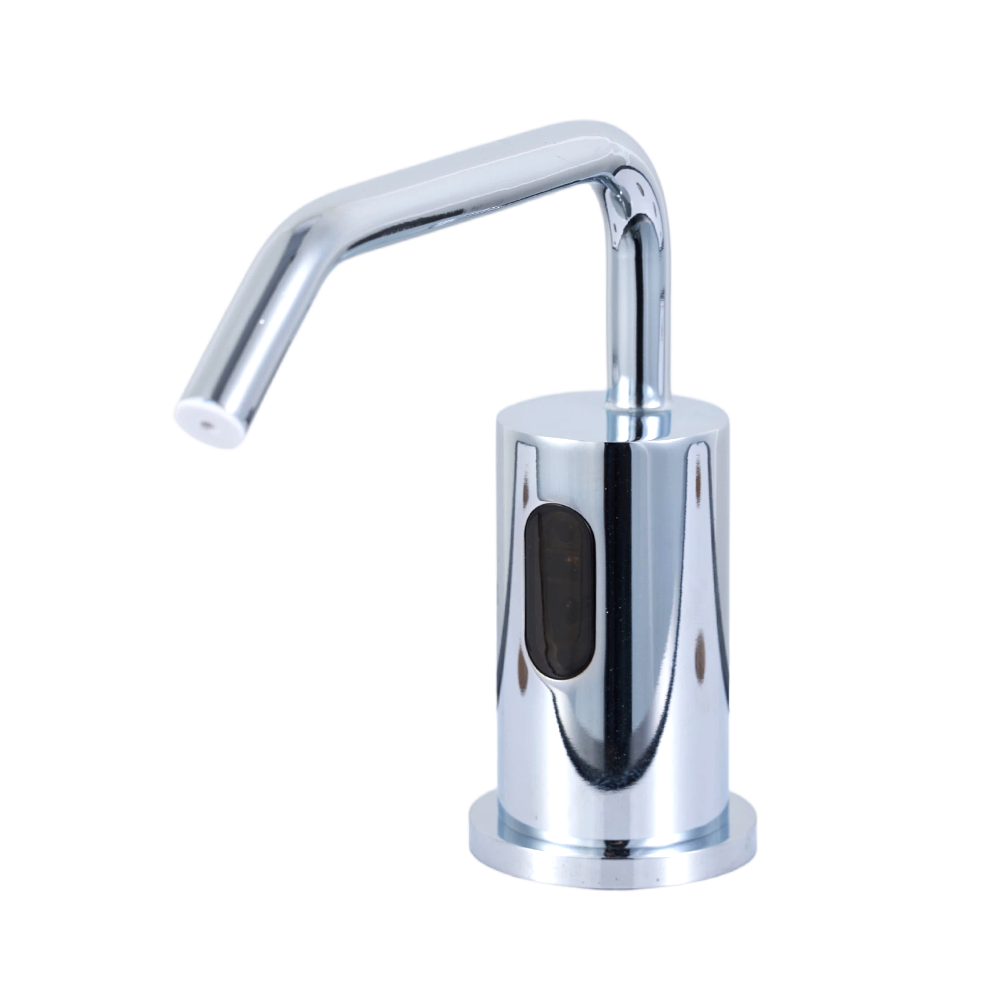
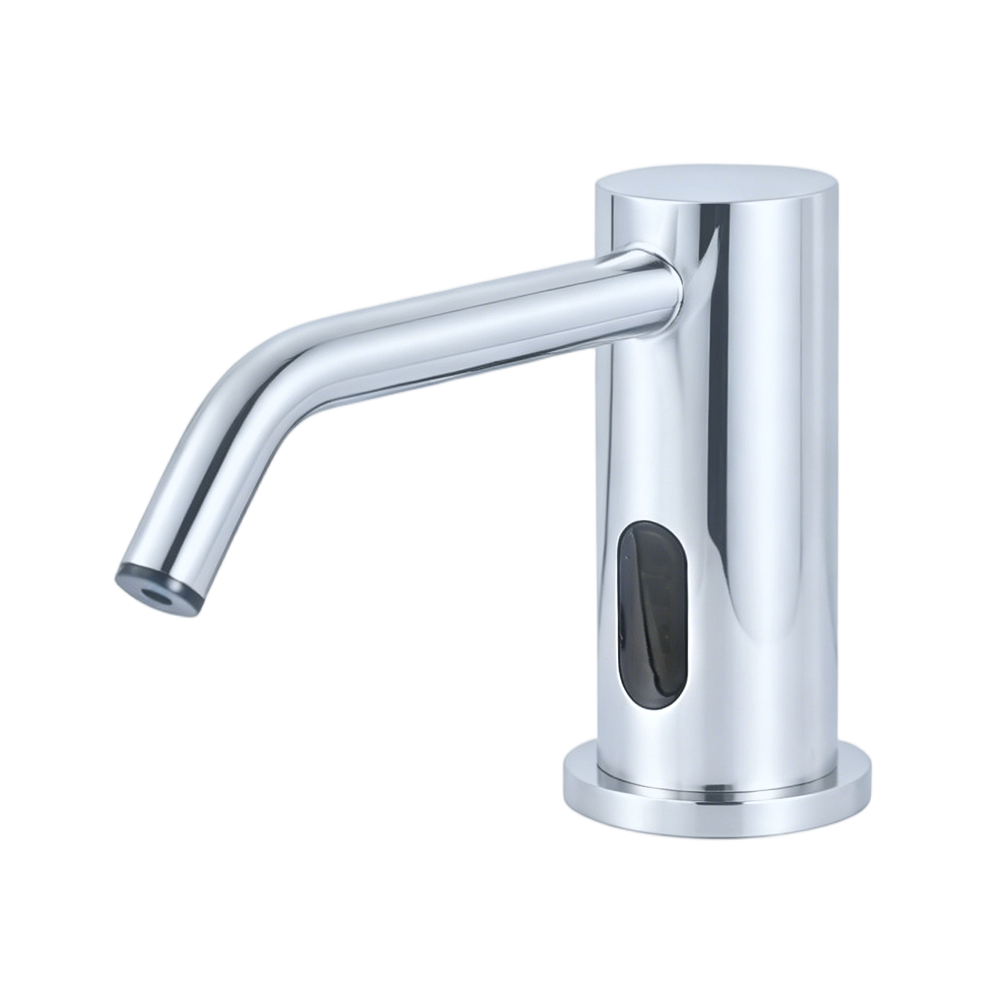
Touchless taps appear in several physical forms. Deck-mounted models install directly onto a countertop or basin and contain the sensor within the spout body. Wall-mounted versions place the spout and sensor on a vertical surface, often with the control electronics concealed behind the wall. Some commercial units separate the sensor panel from the spout, allowing flexible placement.
Spout shapes vary from short, curved designs suited to smaller basins to longer, higher-arc styles that provide more clearance. The sensor window is usually positioned on the underside or front of the spout so that it faces the area where hands naturally approach. Finish options include polished metal, brushed surfaces, and matte coatings that match surrounding fixtures.
Operational Characteristics in Daily Use
Once installed, a touchless tap responds consistently to standard hand movements. The detection zone is calibrated so that normal washing motions trigger the flow without requiring precise positioning. The system ignores slower changes in the background and focuses on sudden proximity events. Water temperature remains stable when a thermostatic or preset mixing valve is included.
Flow volume depends on the valve orifice and supply pressure. Many units deliver a steady stream that remains constant for the duration of activation. The absence of mechanical handles removes points of physical contact during operation. The electronic components operate silently except for the soft click of the solenoid when it opens or closes.
Variations Across Different Models
Touchless taps differ in sensor sensitivity, power source, and additional functions. Battery-powered versions offer installation flexibility where electrical wiring is limited. Hard-wired models provide continuous power without battery replacement cycles. Some units include adjustable sensor range so that installers can fine-tune detection distance according to the basin size and surrounding layout.
Mixing capability also varies. Basic models supply cold water only. Others incorporate a mechanical or electronic mixer that allows temperature selection through a separate lever or preset control. A few designs add a temporary continuous-flow mode activated by a specific hand gesture or secondary sensor, useful for filling containers.
 Previous